Service
Heat Pump Installation
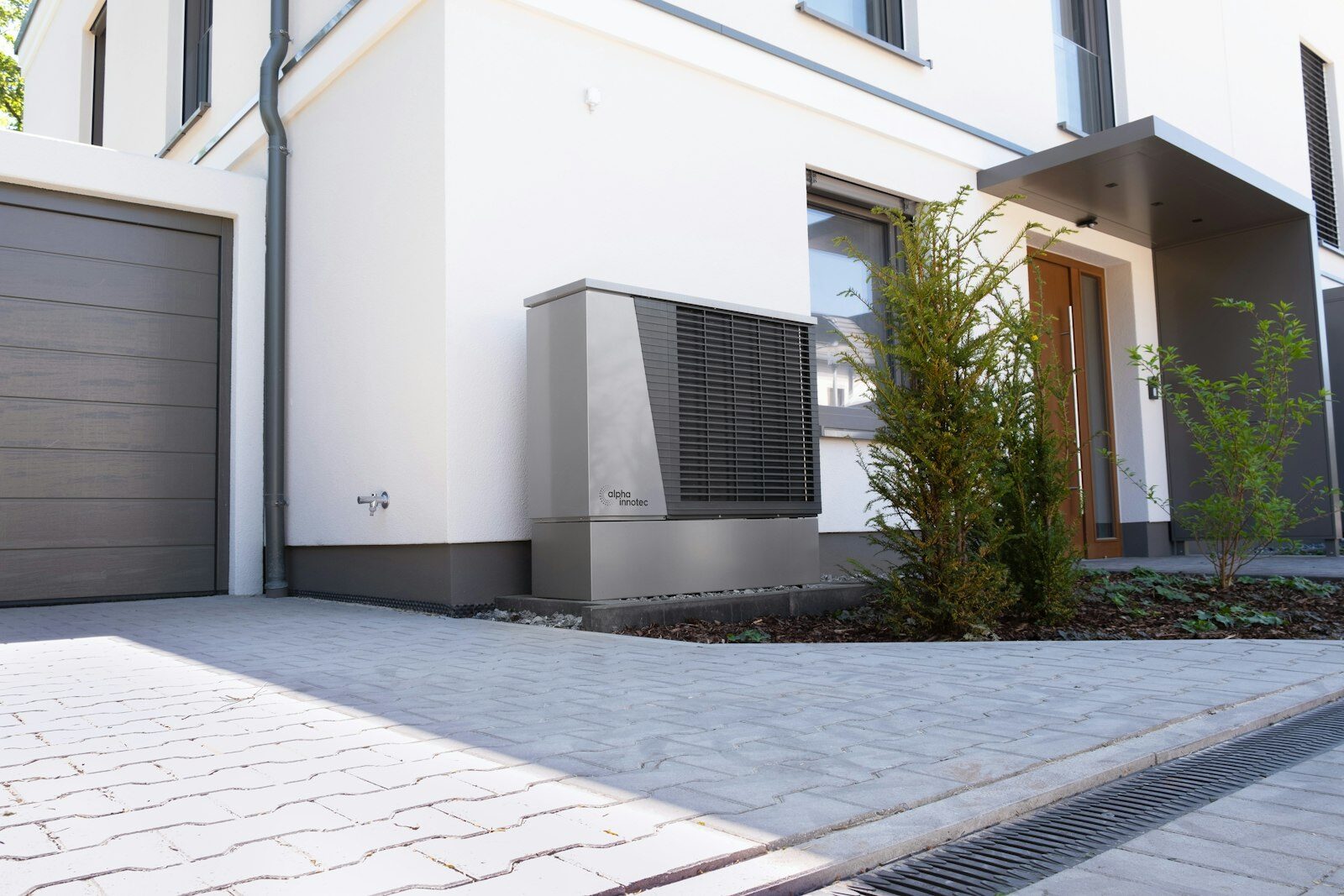
Air source heat pump installation across Surrey, starting with a proper heat-loss survey — not a sales pitch. We'll tell you plainly whether your home is ready, what the £7,500 Boiler Upgrade Scheme covers, and what it will really cost to run.
By the Surrey Heating team
Gas Safe registered engineers · West Molesey, KT8
A heat pump done properly is a wonderful thing: quiet, efficient, and fed by electricity that gets cleaner every year. A heat pump done badly — bolted onto a leaky house with undersized radiators by someone chasing the grant — is a cold home with a big electricity bill, and it poisons the technology's reputation for everyone. We install air source heat pumps, mainly Mitsubishi Electric and Daikin units — we install and are trained on the leading brands — and we start every single job the same way: with a room-by-room heat-loss survey that tells us, in numbers, whether your home is ready.
The physics is worth understanding because it drives everything. A heat pump moves heat from outside air into your home, and it does so most efficiently at low flow temperatures — 35–50°C in the radiators, against the 60–75°C a gas boiler throws out. Lower flow temperatures mean radiators need more surface area to deliver the same warmth, which is why most retrofits involve upsizing several radiators, and why underfloor heating and heat pumps are such natural partners. Insulation matters for the same reason: the less heat the house leaks, the smaller and cheaper the heat pump, and the lower the running costs. We put all of this in the survey report — radiator by radiator, room by room — before you commit a penny to hardware.
The money side: the Boiler Upgrade Scheme currently provides a £7,500 grant towards an air source heat pump in England and Wales, which brings a typical installed price from £11,000–£15,000 down to £3,500–£7,500 — comparable with a premium boiler swap in many homes. The grant requires the installation to be delivered under the required MCS certification scheme, and ours are. Running costs then depend on the ratio between your electricity and gas prices and the efficiency (SCOP) the system actually achieves in your house — which is exactly why the survey comes first, and why we'll tell you honestly if the numbers say "insulate first" or simply "not yet".
How does the £7,500 Boiler Upgrade Scheme work?
The Boiler Upgrade Scheme gives households in England and Wales a £7,500 grant towards an air source heat pump replacing a fossil-fuel boiler. The installer applies for the grant and deducts it from your bill — you never handle the money — but the installation must be delivered under the required MCS certification scheme to qualify.
In practice: we survey the property, design the system and confirm eligibility — the headline requirements are that you own the property and the heat pump replaces a fossil-fuel system — then apply for the voucher on your behalf. The paperwork burden sits with us, not you.
Two honest notes. First, the grant covers air source heat pumps regardless of your current fuel, but the economics look strongest replacing oil, LPG or an elderly gas boiler. Second, scheme budgets and rules are set by government and do change — we'll confirm the current position at your survey rather than promising from a web page.
Is a heat pump right for a Victorian Surrey home?
Often yes, but not always, and not always yet. Victorian and Edwardian solid-wall houses — the classic stock in Surbiton, Kingston and Thames Ditton — lose heat faster than cavity-wall homes, so they need larger heat pumps, bigger radiators and sometimes insulation work first. A heat-loss survey gives you the real answer in numbers.
Solid walls aren't a dealbreaker: plenty of period homes run happily on heat pumps. But the heat loss drives everything downstream — the size and cost of the unit, the number of radiators that need upsizing, and the running cost every winter after. Where the survey shows a room losing heat faster than any sensible radiator can replace it at 45°C flow, the honest fix is insulation or secondary glazing first — loft and floor insulation are often the cheap wins; solid-wall insulation is a bigger decision we'll discuss straight.
We're a heating firm, not a heat-pump sales operation: if your house isn't ready, we'll say so, tell you what would make it ready and roughly what that costs, and offer a well-fitted boiler as the sensible bridge. A deferred heat pump done right beats a rushed one every time.
What does an air source heat pump cost after the grant?
After the £7,500 Boiler Upgrade Scheme grant, a typical air source heat pump installation in this part of Surrey costs £3,500–£7,500. The pre-grant price of £11,000–£15,000 covers the heat pump, a hot water cylinder, radiator upgrades, controls and the full system design and commissioning.
Where you land in the range depends on three things. System size: a well-insulated three-bed semi needs a smaller unit than a draughty five-bed detached. Radiator work: some homes need two radiators upsized, some need eight, and a few are better served by adding underfloor heating downstairs. Hot water: heat pumps need a hot water cylinder, so homes coming off a combi boiler add the cost of a cylinder and its pipework, while homes that already have one may only need it replaced with a heat-pump-ready unit.
Running costs are the question behind the question. A heat pump delivers roughly three units of heat per unit of electricity across the year when well designed — the SCOP — while a good gas boiler delivers a little under one unit of heat per unit of gas. Whether that saves money depends on the electricity-to-gas price ratio at the time, which is why we model your actual usage at the survey instead of promising savings we can't guarantee.
Will a heat pump actually keep my house warm?
Yes — a correctly designed heat pump keeps a home fully warm through a British winter, including the cold snaps. The failures you hear about come from undersized systems, radiators never upgraded for low flow temperatures, or surveys that never happened. Design is the whole game.
A heat pump heats differently rather than worse. Instead of a boiler's short, fierce blasts at 70°C, a heat pump runs long and gentle at 35–50°C, holding the house at a steady temperature rather than swinging between hot and cool. Most converts come to prefer it — the house feels evenly warm, the system is near-silent indoors, and there's no morning wait for the place to heat through. Modern units hold their output in sub-zero weather; they're standard equipment in countries far colder than Surrey.
The honest conditions: the radiators must be sized for the lower flow temperature — which is why upsizing several radiators is normal in a retrofit, and why we calculate it room by room rather than guessing. And the system must be commissioned properly, with weather compensation set up so the flow temperature tracks the outside conditions. Skip either and you get the cold-house stories; do both and the heat pump simply works, year after year.
Heat pump vs new gas boiler: the honest comparison
A heat pump wins on efficiency, carbon and the long term; a gas boiler wins on upfront simplicity and works in any house tomorrow. With the £7,500 grant, the fair comparison is a £3,500–£7,500 heat pump system against a £2,500–£4,000 boiler swap — closer than most people expect.
The case for the heat pump: three-ish units of heat per unit of electricity against a boiler's less-than-one per unit of gas, falling grid carbon every year, and insulation from whatever happens to gas prices over the 20-year life of the kit. The case for the boiler: lower upfront cost even after the grant in homes needing lots of radiator work, no disruption beyond a day or two, and running costs that stay competitive while the electricity-to-gas price ratio stays wide.
Our position, as a firm that installs both and is Gas Safe registered for all gas work: there is no universal answer, only your house, your bills and your plans. If you're staying ten years in an insulable house, the heat pump maths usually comes good. If you're selling in two, or the survey shows a fabric-first job that needs doing anyway, we'll say so. The retrofit assessment exists to replace opinion with numbers — yours included, ours included.
What’s included
- £7,500 Boiler Upgrade Scheme
- Heat-loss survey first, always
- Mitsubishi Electric & Daikin
- Honest advice — including "not yet"
When you need this
- Your gas or oil boiler is near the end of its life and you want the £7,500 grant weighed honestly against a boiler swap
- You're renovating or extending anyway — the cheapest time to upsize radiators and prepare a house for low-temperature heating
- You're off the gas grid on oil or LPG, where heat pump running costs are most compelling
- You own a solid-wall period home in Surbiton, Kingston or Thames Ditton and want a straight answer on whether it's ready
- You've had a heat-pump quote elsewhere that came with no heat-loss survey — and it's making you rightly suspicious
- You care about your home's carbon footprint and want the transition done properly, not performatively
How it works
1. Retrofit assessment
A room-by-room heat-loss survey of your actual house — fabric, glazing, radiators, pipework, cylinder space and the outdoor unit location. Numbers, not vibes.
2. Honest verdict and design
A written report: heat pump size, which radiators need upsizing, expected flow temperatures and estimated running costs against your current bills. If the answer is "insulate first" or "not yet", that's what it says.
3. Grant application
We confirm your Boiler Upgrade Scheme eligibility and apply for the £7,500 voucher on your behalf — the grant comes off your bill, and the paperwork stays on our desk.
4. Installation
Typically 3–5 days: outdoor unit set and piped, cylinder installed, radiators upsized per the design, controls fitted. We keep heating disruption to the shortest window we can.
5. Commissioning and setup
The step that separates good installs from cold houses: weather compensation configured, flow temperatures set to the design, hot water scheduled, and the whole system balanced.
6. Handover and aftercare
A proper walkthrough of the controls — heat pumps run differently from boilers and knowing how saves real money — plus the certification paperwork and an annual maintenance option.
Heat Pump Installation prices in Surrey — from
Indicative starting prices including VAT. The exact price depends on the property, system and parts — call for a firm, fixed quote.
Retrofit assessment / heat-loss survey
Free
Free with a quotation; a standalone written survey is available if you just want the numbers
Air source heat pump, typical semi (after £7,500 grant)
From £3500
Includes cylinder, controls and modest radiator upgrades
Larger detached home (after grant)
From £5500
Bigger unit, more radiator work — Esher and Cobham territory
Complex retrofit (after grant)
From £7500
Solid-wall period homes needing extensive radiator and pipework changes
Radiator upsizing, per radiator
From £180
Often the difference between a heat pump that sings and one that struggles
Annual heat pump service
From £120
Keeps the warranty valid and the SCOP where the design promised
Surrey Heating vs the alternatives
Honest comparison against the national chains and insurance-style cover plans. Pick what works for you — but pick with the facts.
| Criteria | Surrey Heating | Chain / cover plan |
|---|---|---|
| Survey | Room-by-room heat-loss calculation before any quote | Grant-chasing outfits: a quote from your postcode and a photo |
| Honesty about readiness | We'll say "insulate first" or "not yet" and mean it | Every house is ready when commission depends on it |
| Radiator design | Sized room by room for 35–50°C flow temperatures | Existing radiators kept to hit a price — the classic cold-house cause |
| Who installs and commissions | Our own local engineers, who come back for the servicing | National volume installers: subcontracted fitting, call-centre aftercare |
| Both technologies offered | We fit heat pumps and boilers, so advice has no thumb on the scale | Single-product sellers can only recommend the one thing they sell |
In Surrey
Local picture
Surrey's housing stock makes heat pump honesty a local necessity. The Victorian and Edwardian solid-wall terraces of Surbiton, Kingston and Thames Ditton need careful heat-loss work and sometimes fabric upgrades before a heat pump earns its keep — we survey them properly and say so when the answer is "not yet". The post-war and modern homes across Molesey, Walton, Weybridge and Esher are often ready today, and the larger detached properties towards Cobham and Oxshott suit heat pumps paired with underfloor heating and generously sized cylinders. We're based in West Molesey (KT8), we install Mitsubishi Electric and Daikin equipment, and the engineer who commissions your system is the one who answers the phone next winter.
Available across Surrey
FAQ
Heat Pump Installation — your questions, answered
Do I qualify for the £7,500 Boiler Upgrade Scheme grant?+
Will my radiators work with a heat pump?+
Is my house too old or draughty for a heat pump?+
What will a heat pump cost to run compared with my gas boiler?+
How disruptive is the installation?+
Are heat pumps noisy?+
Do heat pumps work when it's freezing outside?+
Should I just get another gas boiler instead?+
Related services
Underfloor Heating
Wet underfloor heating for extensions, renovations and single rooms — warm floors, no radiators.
ReadUnvented Cylinders
Mains-pressure hot water from a Megaflo-type unvented cylinder — G3-qualified installation.
ReadCentral Heating Installation
Full wet central heating systems designed from heat-loss calculations — not guesswork.
ReadBoiler Installation
New combi, system and heat-only boilers — fixed written quotes, guarantees up to 12 years.
Read
Need a heating engineer or plumber?
One number for boilers, plumbing, bathrooms and 24/7 emergencies — and a real person answers it.